
Your Complete Guide to the AMD Ryzen Ecosystem: Unpacking Performance, Platforms, and Possibilities
If you’ve ever found yourself asking, "can someone explain the Ryzen ecosystem to me?" you’re not alone. The world of PC hardware, especially CPUs, can seem daunting with its intricate web of processors, chipsets, sockets, and supporting technologies. AMD’s Ryzen lineup, in particular, has carved out a significant niche, offering compelling performance and value that has reshaped the market. But what exactly does it mean to talk about the "Ryzen ecosystem"? It’s more than just the CPU itself; it’s a comprehensive platform designed to work harmoniously, delivering a specific experience to builders, gamers, and content creators alike.
This guide aims to demystify the AMD Ryzen ecosystem, breaking it down into understandable components and explaining how they interact. By the end, you’ll have a clear picture of what makes Ryzen a formidable contender and why so many choose to build their systems around it.
What Exactly Is the Ryzen Ecosystem?
The term "ecosystem" suggests interconnectedness, and that’s precisely what AMD has cultivated with Ryzen. It’s not just a collection of parts; it’s a philosophy of compatibility, performance scaling, and feature integration that extends beyond the central processing unit.
More Than Just CPUs: A Holistic Approach
When we talk about the Ryzen ecosystem, we’re referring to the entire stack of hardware and software components that are designed to work optimally with AMD Ryzen processors. This includes the CPUs themselves, the motherboards that house them, the chipsets that manage data flow, and even the software that tunes and optimizes performance. It’s about ensuring that from the moment you slot your CPU into its socket, every piece of the puzzle contributes to a stable, powerful, and efficient computing experience.
The Core Philosophy: Performance, Value, and Upgradeability
At its heart, the Ryzen ecosystem is built upon principles of delivering strong multi-core performance, excellent value for money, and a commitment to platform longevity. AMD has historically been lauded for supporting its CPU sockets for multiple generations, allowing users to upgrade their processors without needing a new motherboard right away. This approach reduces the overall cost of ownership and provides a clear upgrade path, making the ecosystem particularly attractive for budget-conscious builders and those who like to incrementally improve their systems.
The Heart of the Ecosystem: Ryzen CPUs
So, when someone asks, "can someone explain the Ryzen ecosystem to me?" the CPU is undoubtedly the first stop. Ryzen processors are built on AMD’s "Zen" microarchitecture, which has seen significant improvements across multiple generations.
Understanding the Generations (Zen Architectures)
- Zen 2 (Ryzen 3000 Series): Introduced 7nm manufacturing, significant IPC (instructions per clock) improvements, and pioneered chiplet design for mainstream desktops.
- Zen 3 (Ryzen 5000 Series): Further refined the architecture, offering even higher IPC and reduced latency, making them incredibly strong in gaming and single-threaded tasks.
- Zen 4 (Ryzen 7000 Series): The latest iteration, introducing the AM5 socket, DDR5 RAM, and PCIe 5.0. Zen 4 CPUs bring substantial clock speed and IPC gains, along with integrated RDNA 2 graphics on most models.
Product Tiers: Ryzen 3, 5, 7, 9, and Threadripper
AMD categorizes its CPUs to help users identify their target performance segment:
- Ryzen 3: Entry-level, ideal for basic computing, light gaming, and home office use.
- Ryzen 5: Mainstream segment, offering excellent all-around performance for gaming, productivity, and light content creation. Often considered the "sweet spot" for value.
- Ryzen 7: High-performance for demanding gamers, streamers, and content creators who need more cores and threads.
- Ryzen 9: Enthusiast-grade, top-tier performance for the most intensive tasks, professional content creation, and extreme gaming.
- Ryzen Threadripper: High-end Desktop (HEDT) and workstation processors with a massive core count (up to 64) for extreme multi-threaded workloads like 3D rendering, video editing, and scientific simulations.
Specialized Ryzen Processors
- Ryzen G-Series (APUs): Processors with powerful integrated Radeon graphics (e.g., Ryzen 5 5600G). Perfect for budget builds, small form factor PCs, or systems without a dedicated graphics card.
- Ryzen X3D Series: Features AMD’s 3D V-Cache technology, adding a massive stack of L3 cache directly onto the CPU die. This significantly boosts gaming performance, making them some of the best gaming CPUs available (e.g., Ryzen 7 7800X3D).
The Foundation: AMD Chipsets and Motherboards
A CPU is only as good as the platform it sits on. AMD’s chipsets and motherboards are crucial components of the Ryzen ecosystem, determining connectivity, expansion options, and compatibility.
Socket AM4: The Legacy of Longevity
For several generations (from Zen to Zen 3), AMD utilized the AM4 socket. This commitment to a single socket allowed users to upgrade their CPUs through multiple generations without changing their motherboard, a significant cost-saving benefit that cemented AMD’s reputation for platform longevity. Understanding these layers is key to truly grasping what it means when someone says, "can someone explain the Ryzen ecosystem to me?" in terms of upgrade paths.
Socket AM5: The Future is Here
With the Zen 4 architecture (Ryzen 7000 series), AMD introduced the new AM5 socket. This transition brings future-proofing with support for DDR5 RAM and PCIe 5.0, enabling faster memory and storage performance. While it means a new motherboard is required for Zen 4 CPUs, AM5 is expected to have a similar multi-generational lifespan as AM4.
Chipset Rundown
AMD’s chipsets, like the CPUs, come in different tiers, each offering varying features and capabilities:
- A-Series (e.g., A620): Entry-level chipsets, often found on more affordable motherboards. They provide basic functionality suitable for everyday computing but typically lack advanced features like overclocking or extensive PCIe lanes.
- B-Series (e.g., B650, B650E): Mainstream chipsets, offering a great balance of features and value. They often support CPU and RAM overclocking, a good number of USB ports, and a decent allocation of PCIe lanes for storage and expansion. The ‘E’ variant (e.g., B650E) typically denotes enhanced PCIe 5.0 support.
- X-Series (e.g., X670, X670E): High-end enthusiast chipsets. These provide the most robust feature sets, including extensive overclocking capabilities, maximum PCIe lanes (often supporting PCIe 5.0 for both GPU and NVMe SSDs), numerous USB ports, and advanced power delivery for flagship CPUs. The ‘E’ variant (e.g., X670E) signifies full PCIe 5.0 support across most critical lanes.
Complementary Components: RAM, GPUs, and Coolers
While the CPU and motherboard form the core, other components are essential for a complete and optimized Ryzen system.
The Importance of RAM (DDR4 vs. DDR5)
Ryzen CPUs are particularly sensitive to RAM speed and latency. Faster RAM directly translates to better performance, especially in gaming and productivity. AM4 systems use DDR4, with 3200MHz to 3600MHz being the common sweet spot. AM5 systems utilize DDR5, with speeds around 6000MHz CL30 often recommended for optimal performance with Zen 4.
Graphics Cards: A Perfect Partnership
While some Ryzen CPUs (APUs and most Zen 4 models) include integrated graphics, a dedicated graphics card is almost always required for serious gaming or demanding graphical workloads. AMD’s Radeon GPUs are a natural fit, offering features like Smart Access Memory (SAM) which can boost performance when paired with a Ryzen CPU. Of course, NVIDIA GeForce cards are also fully compatible and perform excellently.
Cooling Solutions: Keeping Your Ryzen Chill
Ryzen processors can generate significant heat, especially higher-tier models or when overclocked. While some CPUs come with capable stock coolers, aftermarket cooling (air coolers or all-in-one liquid coolers) is often recommended for optimal performance, lower noise levels, and better thermal management, particularly for Ryzen 7, 9, and X3D series CPUs.
Software and Support: The Unsung Heroes
The hardware is only half the story. AMD’s software and ongoing support are integral to the Ryzen ecosystem.
AMD Software: Adrenalin Edition
This comprehensive software suite manages both AMD Radeon GPUs and Ryzen CPUs, offering performance tuning, gaming optimization features, driver updates, and system monitoring. It provides a centralized hub for controlling many aspects of your AMD-powered system.
Chipset Drivers and BIOS Updates
Regularly updating your motherboard’s BIOS (Basic Input/Output System) and AMD chipset drivers is crucial. These updates often bring performance improvements, stability fixes, and support for new CPU models or features, ensuring your system runs optimally.
Community and Manufacturer Support
The vibrant AMD community, coupled with extensive support from motherboard manufacturers and AMD itself, means resources are readily available if you encounter issues or need guidance on tuning your system.
Why Choose the Ryzen Ecosystem?
Now that we’ve broken down the components, the value proposition of the Ryzen ecosystem becomes clear.
Performance Per Dollar
AMD has consistently offered competitive performance at attractive price points, making Ryzen a go-to choice for users looking for excellent bang for their buck, particularly in multi-threaded applications.
Upgrade Path Potential
AMD’s commitment to platform longevity, especially with AM4, provided unparalleled upgrade flexibility. While AM5 is new, it promises a similar future, allowing users to potentially extend the life of their system for years to come with just a CPU upgrade.
Innovation and Competition
AMD’s aggressive innovation with Zen architectures, chiplet designs, and technologies like 3D V-Cache has driven significant competition in the CPU market, benefiting consumers with better products and more choices.
Conclusion
Hopefully, this deep dive has helped answer your question, "can someone explain the Ryzen ecosystem to me?" It’s a carefully crafted platform where the CPU, motherboard, chipset, memory, and software all play crucial roles in delivering a cohesive and powerful computing experience. Whether you’re building a new gaming rig, a workstation for content creation, or a reliable everyday PC, understanding the nuances of the Ryzen ecosystem will empower you to make informed decisions and get the most out of your hardware.
The AMD Ryzen ecosystem stands as a testament to thoughtful design, offering a compelling blend of performance, value, and upgrade potential that continues to push the boundaries of modern computing. Happy building!
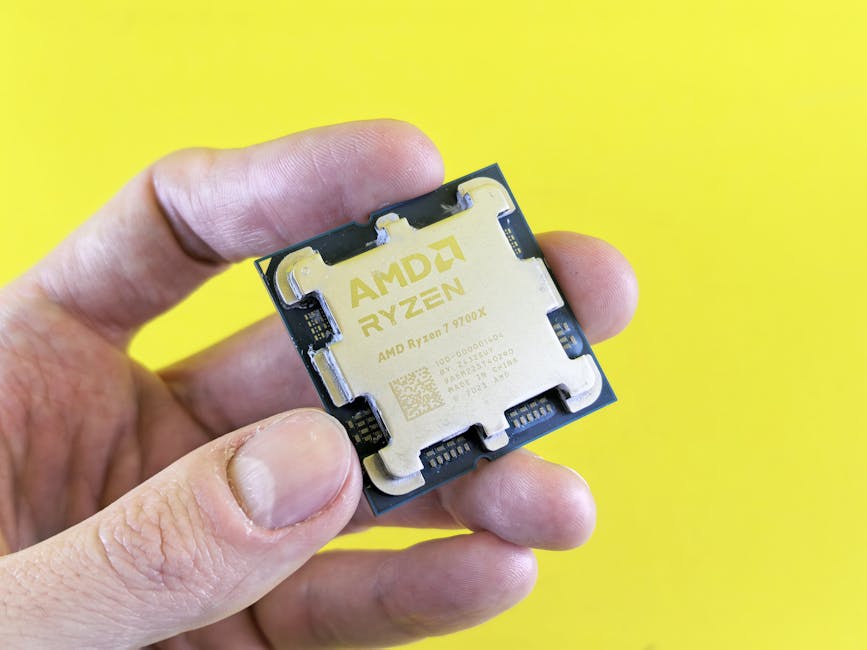
Photo by Andrey Matveev on Pexels
Information Security Asia is the go-to website for the latest cybersecurity and tech news in various sectors. Our expert writers provide insights and analysis that you can trust, so you can stay ahead of the curve and protect your business. Whether you are a small business, an enterprise or even a government agency, we have the latest updates and advice for all aspects of cybersecurity.